

Serial ATA Interface
The Serial ATA (SATA) interface is a widely used computer bus interface that connects host bus adapters to mass storage devices such as hard disk drives (HDDs), solid-state drives (SSDs), and optical drives. Introduced in the early 2000s as a successor to the Parallel ATA (PATA) standard, SATA revolutionized data transfer technology by offering significant improvements in speed, efficiency, and scalability. Key Features of SATA1. Serial Data Transfer: Unlike its predecessor, which used parallel data transmission, SATA employs a serial communication method. This reduces the number of wires required, minimizes electromagnetic interference, and allows for higher data transfer rates. The serial architecture also enables longer cable lengths, up to 1 meter, compared to the 18-inch limit of PATA.2. High-Speed Performance: SATA has evolved through multiple generations, each offering increased bandwidth. The initial SATA I standard provided a maximum transfer rate of 1.5 Gbps (gigabits per second). SATA II doubled this to 3 Gbps, and SATA III further increased it to 6 Gbps. These advancements have made SATA a reliable choice for both consumer and enterprise storage solutions.3. Hot Swapping: SATA supports hot swapping, allowing users to connect or disconnect drives without shutting down the system. This feature is particularly useful in environments where continuous operation is critical, such as servers or data centers.4. Thinner Cables: SATA cables are much thinner and more flexible than the bulky ribbon cables used in PATA. This not only improves airflow within the computer case but also simplifies cable management, leading to better system organization and cooling.5. Native Command Queuing (NCQ): SATA introduced NCQ, a technology that optimizes the order of read and write commands to reduce mechanical delays in HDDs. This results in faster data access and improved overall performance.6. Backward Compatibility: SATA is designed to be backward compatible with older PATA devices through the use of adapters. This ensures a smooth transition for users upgrading their systems. Applications of SATASATA is commonly used in personal computers, laptops, and servers for connecting internal storage devices. Its affordability and widespread adoption have made it a standard in the industry. While newer interfaces like NVMe (Non-Volatile Memory Express) have emerged for high-performance SSDs, SATA remains relevant for cost-effective and mid-range storage solutions. ConclusionThe Serial ATA interface has played a pivotal role in advancing storage technology, offering a balance of performance, reliability, and affordability. Its serial architecture, high-speed capabilities, and user-friendly features have made it a cornerstone of modern computing. Despite the emergence of faster alternatives, SATA continues to be a vital component in the storage ecosystem, catering to a wide range of applications and user needs.
Products
Category:
-
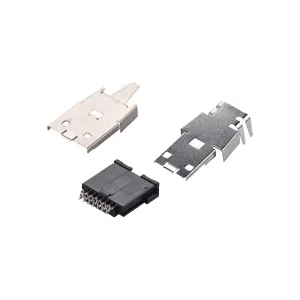
ESATA 7P Rivet Female Connector 3-Piece
Category: Plate EndBrowse number: 413Number:Release time: 2025-05-24 09:43:16The ESATA 7-pin female connector (three-piece kit) is designed for high-speed external storage connections, delivering reliable SATA data transfer up to 6 Gb/s (SATA III)
News
Category:
-
[Industry News]12+4P GPU Power Connectors Optimized for Graphics Card Appli...
2026-06-02 01:50:57
Case
Category:
No search results found!
Video
Category:
No search results found!
Download
Category:
No search results found!
Job
Category:
No search results found!
Featured Products
No search results found!



 Phone